

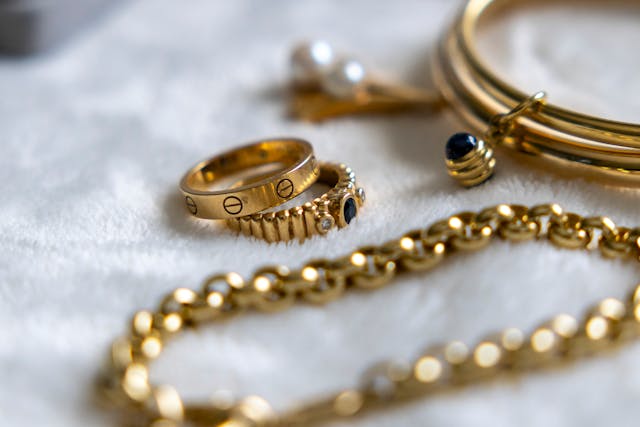
Gold jewellery has a funny way of becoming much more than jewellery. A ring isn’t always just a ring. Sometimes it’s a whole decade in miniature. A chain can hold the memory of a version of you who dressed differently, loved differently, spent differently, or simply wanted different things. A bracelet might have been bought on impulse, inherited with no real backstory, given with love, or kept for years because getting rid of it felt somehow wrong.
That’s how gold jewellery becomes a personal archive. Not a tidy, museum-style archive with neat labels and perfect lighting. More like a private collection of chapters, loose pages, old feelings and unfinished edits, tucked into velvet boxes, bedside drawers and little pouches you only open when you’re looking for something else.
But even the most meaningful archive needs a review now and then. At some point, you may start looking at your jewellery and asking what still belongs. Some pieces may need repair. Some may be ready for redesign. Some may be better passed on. Others may lead you to consider 18k gold resale options for jewellery owners when they no longer fit your life, your style, or the person you are now.
Why Gold Carries So Much Feeling
Gold lasts. That’s part of the problem, and part of the magic. It survives fashion cycles, break-ups, house moves, family changes and all the ordinary chaos of a life being lived. Clothes fade. Furniture wears out. Phones become useless in a few years. Gold just sits there, still gold, quietly holding its place.
That permanence gives it emotional weight. A pendant from a grandparent can feel like a tiny physical link to them. A wedding band can become hard to look at after a separation. Earrings bought for a milestone birthday might still bring back the pride of that moment. The metal stays the same while everything around it changes.
That’s why jewellery rarely has just one kind of value. Of course, there’s the material value. But there’s also the sentimental value, the family value, the style value, the guilt value, the “I might wear this one day” value, and sometimes the “I don’t even like this, but I can’t quite let it go” value.
When the Jewellery Box Starts Feeling Crowded
Most people don’t wake up one morning and decide to reassess every piece they own. It usually happens slowly. You open a drawer and realise there are pieces you haven’t worn in years. You try on a ring and it feels like it belongs to an older version of your taste. You inherit jewellery that matters to the family story, but doesn’t really feel like yours. Or you keep something simply because it was expensive, not because you actually want it.
That’s where editing becomes useful.
Editing doesn’t mean being ruthless. It doesn’t mean stripping all the feeling out of your collection or pretending the past didn’t matter. It just means looking properly. What still earns its space? What needs fixing? What could become something new? What should be documented, gifted, sold, stored, or finally released?
A well-edited jewellery collection doesn’t have to be small. It just has to make sense. Some people keep almost everything because continuity matters to them. Some keep one deeply meaningful piece and let the rest go. Some turn old gold into a new design. Some sell pieces and use the money for something more useful, more joyful, or more relevant to right now. None of these choices is automatically more or less sentimental than another.
The Guilt Bit, Because There’s Usually Guilt
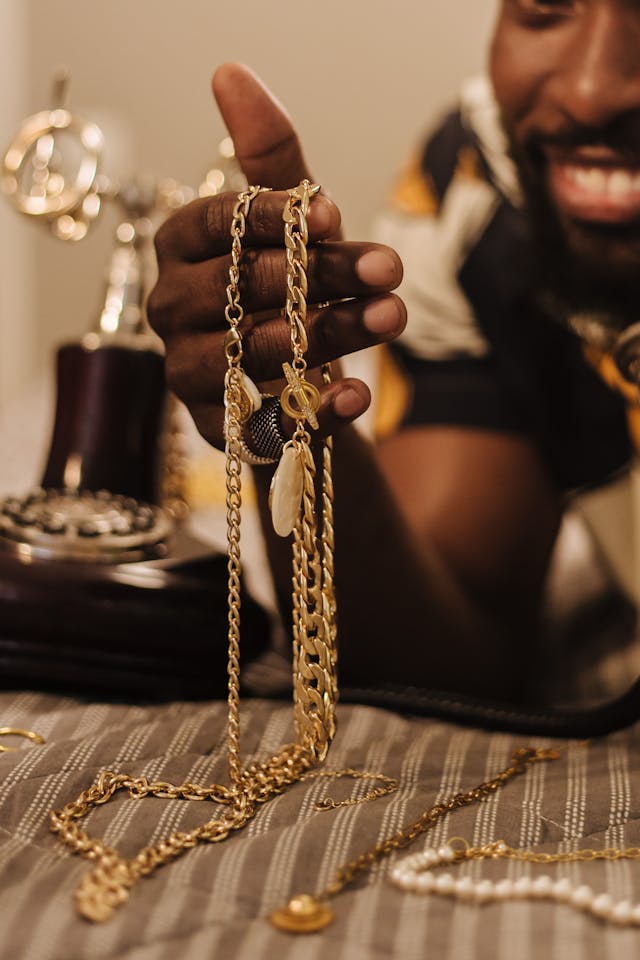
Letting go of jewellery can feel surprisingly loaded. People worry that selling or changing a piece means disrespecting the person who gave it to them, or the moment it came from. Inherited pieces can be especially tricky. Even if you don’t like the design, even if you’ll never wear it, even if it’s been sitting untouched for years, there can still be that little voice saying, “But shouldn’t I keep it?”
Maybe. Maybe not.
Memory doesn’t live only in metal. You can photograph a piece before you sell it. You can write down its story. You can keep the stone and change the setting. You can pass it to someone else in the family who’ll actually wear it. You can also admit that some jewellery carries complicated feelings, and that releasing it might be the cleanest, kindest choice.
A piece with modest resale value might be priceless to you. A high-value piece might mean very little emotionally. The point isn’t to make every decision based on money, or every decision based on sentiment. It’s to be honest about what the piece is doing in your life now.
Editing Without Erasing
A good first step is sorting your jewellery into loose categories: pieces you wear, pieces you’d wear if they were repaired, pieces with strong sentimental value, pieces you’re unsure about, and pieces you’re ready to move on from. That last category doesn’t need to be dramatic. You’re not betraying anyone by noticing that a piece has done its job.
For inherited jewellery, a little documentation can help. Write down who owned it, where it came from, when it was given, and any story attached to it. Even if the piece is later redesigned or sold, the record stays. Sometimes that’s the part future generations will care about most anyway.
Redesign is another option, especially when the gold itself matters but the style doesn’t. An old ring can become a pendant. Several unworn pieces can become one beautiful, wearable item. A dated design can be softened, simplified, or rebuilt completely. The material keeps its history, but the form gets to catch up with your life.
Then there’s resale. For broken pieces, duplicates, old gifts with no emotional pull, or jewellery that simply no longer suits you, selling can be a perfectly sensible choice. The value doesn’t have to sit locked in a drawer forever. It can become a new piece, a repair fund, savings, travel, or something completely practical.
Questions to Ask Before You Decide
Before you edit your collection, give yourself a bit of room. Don’t decide everything in one sitting, especially if there’s grief, family tension, or relationship history attached.
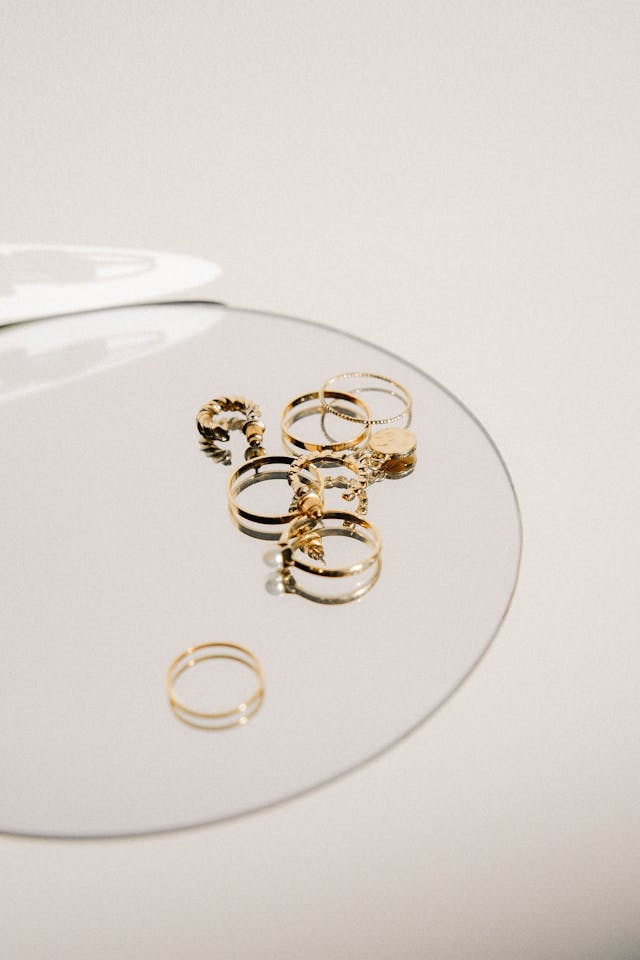
Ask when you last wore the piece. Ask whether you’d choose it again today. Ask whether you love it, or whether you feel obliged to keep it. Ask whether another family member might value it more. Ask whether it’s worth repairing, redesigning, documenting, selling, or simply putting aside until you’re clearer.
For higher-carat gold, antique pieces, designer jewellery or items with gemstones, a professional assessment can also be useful. Knowing what something is worth doesn’t mean you have to sell it. It just gives you better information.
Your Jewellery, Your Edit
Gold jewellery sits close to the body, so it makes sense that it can feel personal. It marks love, loss, status, celebration, family, identity and change. Over time, a jewellery box can become less like an accessories drawer and more like a biography.
But biographies get revised. Some chapters stay. Some get shorter. Some are rewritten completely.
Editing your jewellery archive isn’t about being careless with memory. It’s about recognising that you’re allowed to choose what comes forward with you. Keep what still speaks. Repair what deserves another chance. Redesign what needs a new shape. Sell what no longer belongs.
The gold remains gold. The story is still yours.
