

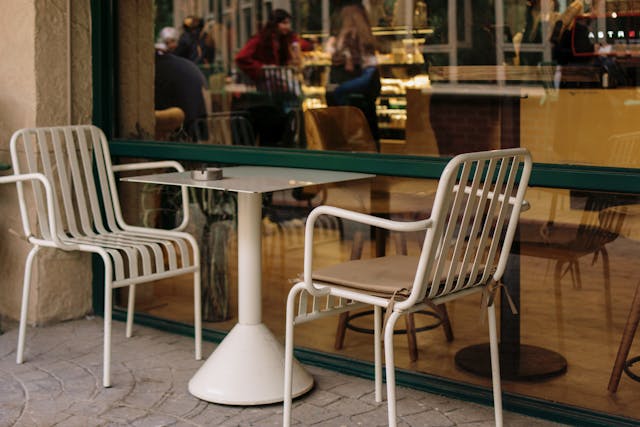
Outdoor furniture in Australia is taking a serious beating from relentless UV radiation, unpredictable rainfall & rising dust levels, all of which are contributing to supercharged degradation risks, according to the experts in environmental and engineering fields. People might look at their outdoor spaces every day and think ‘oh that’s fine’. However, in reality, it’s just a long slow process of material breakdown going on 24/7 and gradually chipping away at material strength. It’s not just about how it looks; however, the impact goes way deeper, affecting the strength, durability & long-term economic value of your outdoor furniture.
UV Radiation and Heat Degradation in Australia
Australia’s harsh environment throws outdoor materials into the deep end of the UV exposure spectrum, some of the most intense anywhere on the planet. You only have to look at the high UV index readings reported by ARPANSA in cities like Brisbane, Perth, & Darwin to see this. In fact, levels often reaching extreme levels of 11+ during the summer months. This is when degradation starts to take place at the molecular level, slowly breaking down the chemical bonds that hold everything together. Research from the CSIRO is pretty stark. It shows that if you leave polypropylene and polyethylene outdoor furniture exposed to the elements, you can lose up to 30 60% of its tensile strength in just 24 36 months. It’s not just plastics that are affected, by the way. Timber surfaces exposed to high levels of UV light experience lignin breakdown, which results in an annual loss of around 0.5 1.0 mm, gradually fading the colour and reducing strength. Even aluminium frames, often thought to be pretty durable, are not immune to degradation either. For example, powder coated varieties lasting 10 15 years inland, but dropping to 5 7 years in coastal areas where the combination of salt and UV can cause real damage.
Rainfall, Humidity and Moisture Induced Structural Failure
But it’s not all about UV, moisture exposure can cause just as much damage. The Bureau of Meteorology records some pretty high levels of rainfall in places like Far North Queensland. Because of this, the materials are under continuous stress from wet dry cycles. When timber is exposed to this kind of wet dry cycle, it can easily exceed 20% moisture content, at which point fungal growth and decay start to become a real risk. This can cause the structure to expand and contract. As a result, resulting in tensile stress on joints and fasteners. Metal structures are also at risk, with galvanised steel in coastal areas corroding at a much faster rate than inland, often 20 times faster, where high levels of salt and moisture in the air lead to accelerated oxidation & biological growth.
Dust Deposition and Abrasive Surface Wear
Meanwhile, in the drier areas of inland Australia, a different kind of process is at work, one that’s just as damaging as UV & moisture. High levels of PM10 particles in the air, often containing silica and mineral compounds, tend to accumulate at a rapid rate, especially during dry wind events. These particles can build up to the tune of 2 5 grams per square metre per month in arid regions, resulting in a gradual loss of protective coatings of around 15 25% per year depending on how often the furniture is exposed. Surface abrasion may seem cosmetic. However, it can also provide an entry point for moisture, which in turn can lead to accelerated corrosion in metal components. Even if a piece of furniture is in a shaded area, dust is still going to keep building up, which means it needs to be cleaned more often than furniture that’s only exposed to UV.
Protective Covers, Letting Them Help Reduce Environmental Impact
Engineering checks show that protective covers do make a real difference when it comes to cutting down on the stress that environment puts on things. And one of the best bits about them is that covers with UV protection can actually bring the surface temperature down by as much as 20°c on the hottest summer days. Consequently, that’s going to slow down the breakdown that can be driven by heat. Those high-density polyester materials that can go from around 600D up to 900D, well they block a good percentage of UV, between 70 90%. This means that the breakdown that comes from light actually happens much slower than it would otherwise. Therefore, a definite plus for photochemical breakdown. Talking of plus points, doing covers with water resistance of over 1500mm pretty much stops water getting in when it’s raining heavily. And it also reduces the amount of humidity that builds up inside the cover. Specifically, it’s a reduction of around 80% in humidity levels.
When you look at real life studies on how quickly things degrade when covered versus not covered in places like coastal Australia, the covered ones come out on top. However, it still really matters that there’s some airflow going on. Otherwise, you can end up with humidity levels that are too high, we’re talking above 75% and that just increases the risk of mould. This shows you that it’s not just the material that matters but also how it’s all put together and how well the covers balance out the environment.
