

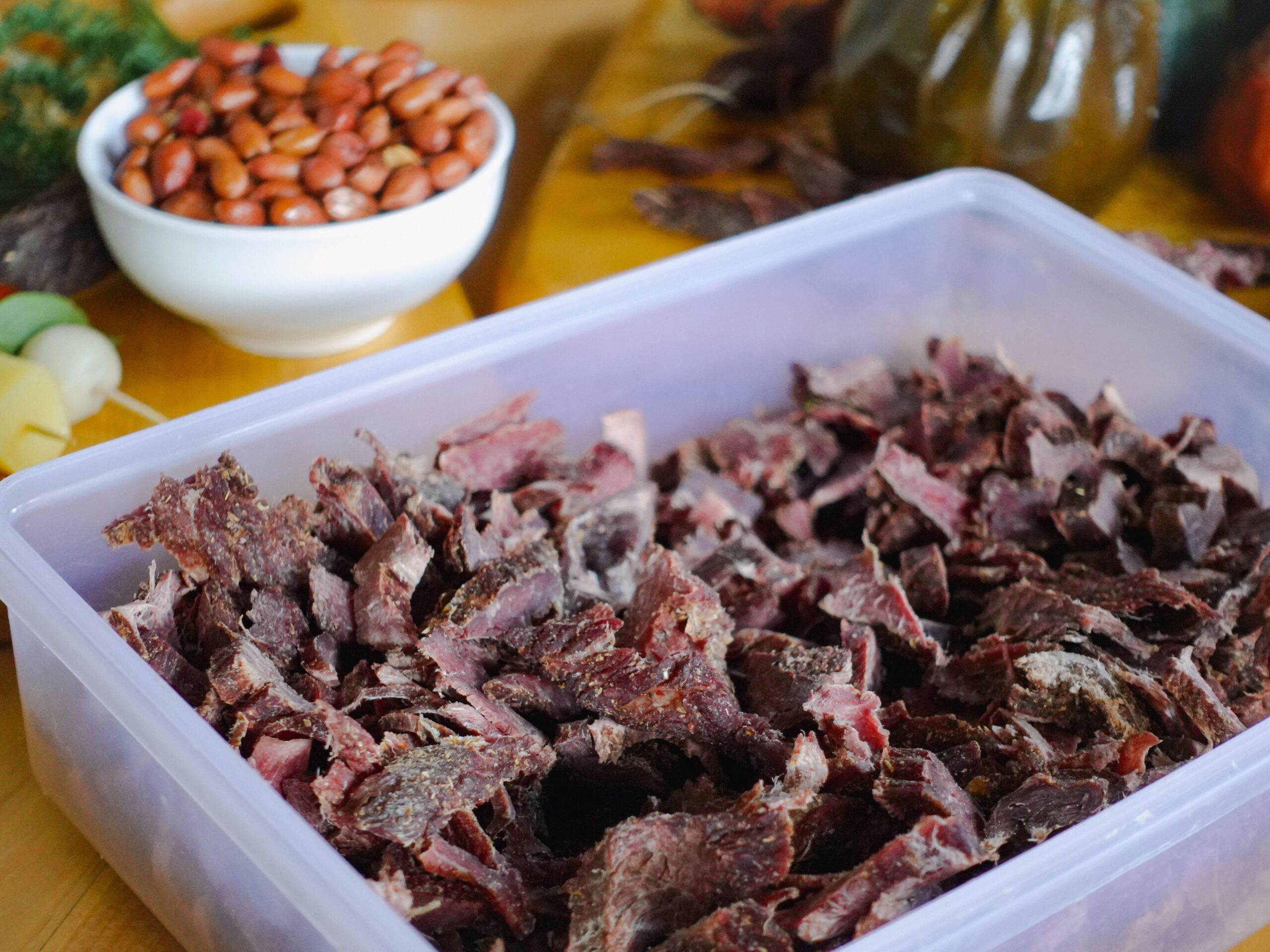
A strip of raw beef can hang in warm, circulating air for a week, after which it ends up on a shelf in the pantry. This process describes the manufacture of biltong, a dried meat product that does not require fire. Traditionally made in South Africa, this meat is now available in Australia next to the other two similar products, jerky and salami. It is worth considering differences between these types of food since knowing them helps pick the right package.
Drying, Not Cooking
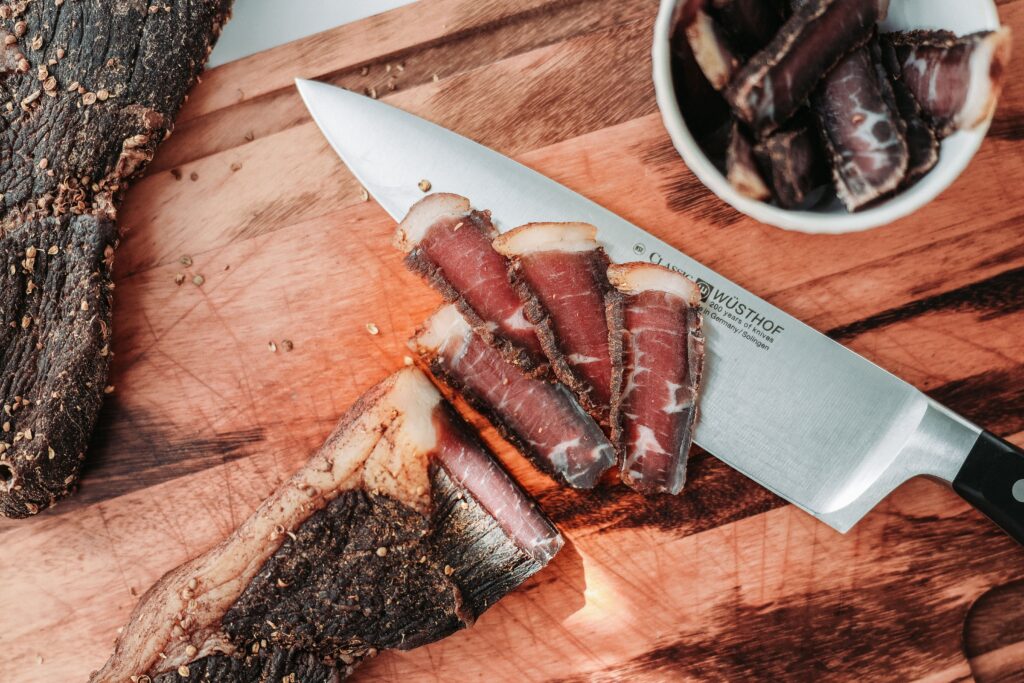
While jerky is cut into thin strips and dried at a low temperature, biltong requires beef cut into thick slices. They are hung in cool air with circulation and previously prepared with vinegar and salt. Also, it is seasoned with the typical biltong seasonings, coriander and black pepper. Silverside and topside lean cuts are used because of their even dehydration and easier slicing.
With dehydration, meat gets a chewy texture while being dry outside and humid inside. Thick cuts take more time to be dehydrated, that is why recipes for biltong usually provide drying time in days, but not in hours. The traditional way of making biltong does not involve heating; thus, the choice of beef is more important than a marinade. Homemade biltong drying boxes with fans are used as well.
The Importance of Dryness
Bacteria require water to multiply. Dried meat is considered safe only if there is little free water in it. Food scientists define the water content of food by water activity, which is defined from 0 to 1. Australian guidelines on dried meats say that a water activity of 0.85 or less is needed.
Home biltong makers have no way to measure water activity, which makes reliable recipes, clean equipment and constant airflow crucial. The humidity of the environment changes depending on the weather, so a piece of meat dehydrated in one week might need longer in another. Salmonella and Shiga toxin-producing E. coli bacteria are among the main hazards. Keeping work surfaces clean, making the beef cold before hanging it and washing hands after each action help reduce these risks. For commercial producers, it is necessary to prove the effectiveness of their drying technology, not just check the consistency of the meat.
What Borders and Labels Really Mean?
Australia’s biosecurity rules for biltong are a bit more complicated than you might think. Yeah, you can’t bring in biltong with pork, and you definitely can’t send it through the post because African swine fever is a major biosecurity risk. And that’s why the rules are in place. If you’re planning on bringing some dried meat with you, it’s worth having a squiz at the agriculture department’s website to see what the import conditions are.
When you’re buying biltong in Australia, the label on the back is actually pretty important. Most of the time you can find out where the meat came from, so if you see a ‘made in Australia’ label, that’s good to know, even if the beef or spices might have come from overseas. The thing is, ‘Product of Australia’ means that almost everything came from here. But if it just says ‘Packed in Australia’, that just means it was packed here; it might not necessarily mean the cattle were raised here. ‘Australian owned’ is a bit of a misnomer; it actually refers to the business rather than where the beef came from.
The Beef Behind the Biltong Strips
ABARES are forecasting that beef production in Australia is going to take a 5% hit in 2026 to 27. Apparently production is going to drop to 2.9 million tonnes, which would still be one of the highest on record. And finished cattle prices are also expected to drop by about 4%. But this does raise a question: if cattle prices are dropping, why isn’t the biltong in the shops going to be cheaper? Well, one reason is that a lot of water gets removed from the beef when it gets dried, so you need a lot more raw beef to make one kilogram of biltong. And then there are the costs of spices, labour and packaging to consider.
Reading the Pack Before You Dive In
The ingredients panel on the back of the pack should be dominated by beef, vinegar, salt, and spices. If you see a long list of sweeteners and additives, it’s probably because the manufacturer is more concerned with getting it to last on the shelf rather than using traditional methods. And it’s worth keeping an eye on the salt content because drying really concentrates the ingredients that were used in curing.
When you’re looking at the pack, there are a few other things you might want to check out, like the storage instructions and use-by date. If the use-by date is around the corner, you might want to make sure you store it in a cool place because it can turn out a bit differently if it gets too hot.
How Much Biltong You Need?
Biltong is pretty high in protein, dense and salty, which makes small portions a good idea. If you serve a few strips with some fruit or cheese, it’s a pretty satisfying snack. And one of the best things about biltong is that you can take it on the go; small packs are great for bushwalks or long drives. For people who have to keep an eye on their blood pressure, you might also want to check the sodium content on the nutrition panel. And when you do open the pack, just pop it in a sealed container in a cool, dry spot to keep it fresh.
