

Maintaining high standards of cleanliness is essential for every hospitality business, from small cafés and restaurants to busy hotels and catering facilities. Commercial dishwashers play a vital role in keeping crockery, glassware, utensils, and kitchen equipment clean while supporting efficient daily operations. Unlike domestic appliances, commercial dishwashers are designed to handle frequent washing cycles, larger workloads, and the demanding requirements of professional food service environments. Choosing the right machine can help businesses improve turnaround times, maintain hygiene standards, and manage labour more effectively. Understanding the different types of commercial dishwashers, their operating costs, cleaning capabilities, and maintenance requirements allows hospitality operators to make informed decisions that support long-term performance.
Understanding Different Types of Commercial Dishwashers
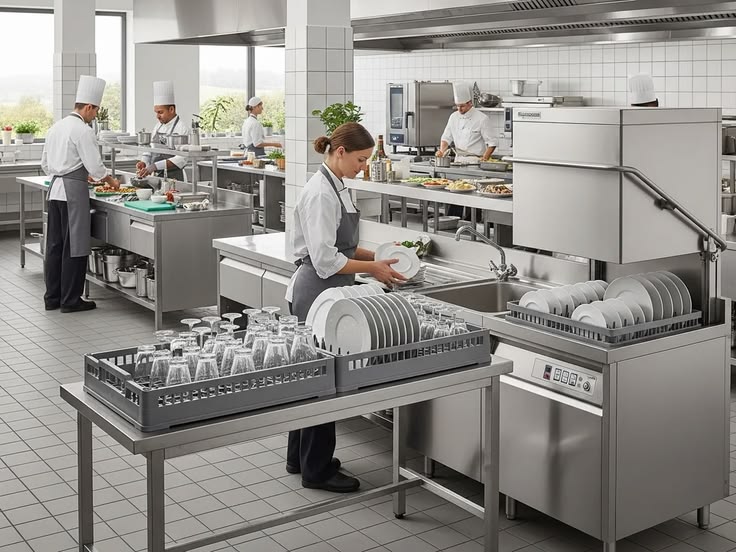
Commercial dishwashers are available in several configurations to suit different hospitality environments and washing volumes. Undercounter models are often suitable for small cafés, bars, and compact kitchens where space is limited and dishwashing requirements are relatively modest. Pass-through or hood-type machines are commonly used in restaurants and medium-sized kitchens because they can process larger quantities of dishes while supporting an organised washing workflow. Rack conveyor dishwashers are designed for high-volume operations, including hotels, hospitals, and large catering facilities, where dishes need to move through continuous washing stages. Understanding these options helps businesses select equipment that matches their operational demands without taking up unnecessary space. Exploring washtech dishwashers can help hospitality businesses compare suitable commercial dishwashing solutions.
Each dishwasher type offers different advantages depending on the kitchen layout, staff numbers, and volume of tableware used during service. A small venue may prioritise a compact machine that fits beneath a worktop, while a busy restaurant may benefit from a pass-through design that allows staff to load and unload racks efficiently. Larger facilities may require conveyor systems capable of processing multiple racks in succession during peak periods. It is important to assess both average and peak washing requirements before choosing a model. Selecting equipment based on actual usage helps prevent bottlenecks, unnecessary operating expenses, and delays in returning clean dishes to service.
Choosing the Right Capacity for Your Business
Capacity is one of the most important considerations when investing in a commercial dishwasher. A machine that cannot keep up with demand may leave staff waiting for clean plates, glasses, and utensils during busy service periods. On the other hand, an oversized machine may consume more resources than necessary if the venue operates at a relatively low volume. Business owners should consider the number of customers served daily, the size of the menu, the amount of tableware used per customer, and the frequency of washing cycles. These factors provide a clearer understanding of the machine’s required throughput and help narrow down suitable options.
Peak service periods deserve particular attention when calculating the necessary washing capacity. Restaurants may experience a rapid increase in dirty dishes during lunch and dinner, while hotels may need to process large quantities of crockery after breakfast service or special events. Catering businesses also face changing demands depending on the size and schedule of individual functions. Checking the machine’s stated rack capacity, cycle duration, and recommended operating conditions can help establish whether it will cope with these fluctuations. Adequate space for dirty dishes, clean racks, and drying areas is equally important because an efficient dishwasher cannot deliver its full benefits if the surrounding workflow is poorly organised.
Maintaining Hygiene and Consistent Cleaning Results
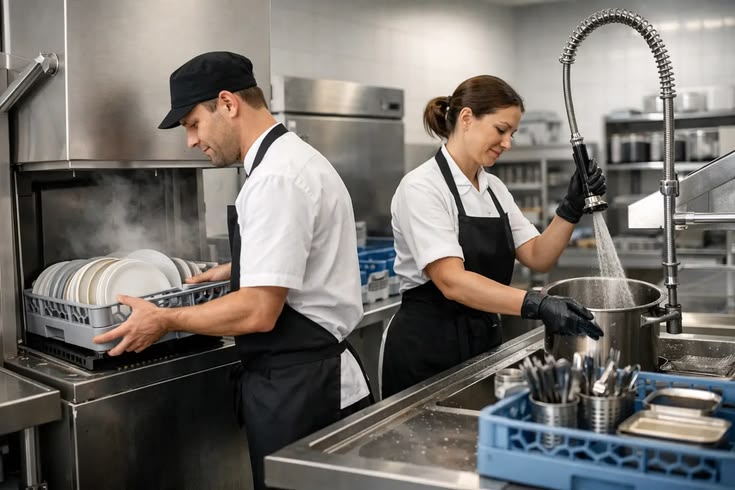
Hygiene is a central concern for hospitality businesses because dishes and utensils must be cleaned effectively before they are used again. Commercial dishwashers generally use controlled combinations of water temperature, detergent, washing action, and rinsing to remove food residue and support hygienic cleaning. However, achieving reliable results depends on operating the machine correctly and following the manufacturer’s instructions. Staff should scrape excess food from dishes, load racks appropriately, and avoid overcrowding items that could prevent water from reaching all surfaces. These practices help improve cleaning performance while reducing the need for repeated wash cycles.
Businesses should also understand the difference between cleaning and sanitising. Cleaning removes food particles and other visible soil, while sanitising reduces microorganisms to levels considered acceptable under the applicable food safety requirements. Depending on the machine, sanitising performance may rely on suitable rinse temperatures or approved chemical processes. Operators should verify that their equipment meets local regulatory requirements and use the correct detergent, rinse aid, and sanitising products where applicable. Regular checks of wash and rinse temperatures, chemical dosing systems, and overall machine performance can help identify problems before they affect service. Proper staff training and documented cleaning procedures further support consistent hygiene standards.
Improving Energy Efficiency and Controlling Operating Costs
Running a commercial dishwasher involves ongoing expenses beyond the initial purchase price. Water consumption, electricity, heating, detergents, rinse aids, servicing, and replacement parts all contribute to the total cost of ownership. Comparing machines based on their published water and energy consumption can help businesses identify models that may be more economical over time. Features such as heat recovery, efficient wash cycles, insulation, and appropriate water management may reduce resource consumption, depending on the model and operating conditions. It is important to compare specifications under similar conditions rather than relying solely on marketing claims.
Daily operating practices can also influence the cost of commercial dishwashing. Running full racks without overloading them, using the recommended settings, and maintaining filters can help reduce wasted water and energy. Staff should avoid unnecessary pre-rinsing when the machine’s design and manufacturer’s instructions do not require it, although excess food should still be removed appropriately. Correct detergent dosing is important because using too much product can increase expenses without improving results, while insufficient detergent may lead to poor cleaning. Regular maintenance helps preserve efficiency by ensuring that spray arms, filters, heating components, and other essential parts function as intended. Over time, these measures can support more predictable operating costs and reduce avoidable waste.
Extending Equipment Lifespan Through Proper Maintenance
Regular maintenance is essential for keeping commercial dishwashers reliable in demanding hospitality environments. Food debris, grease, limescale, and detergent residue can accumulate in different parts of the machine, affecting cleaning performance and potentially causing equipment problems. Daily tasks may include cleaning filters, checking spray arms, wiping door seals, and removing residue from the washing chamber according to the manufacturer’s instructions. Staff should also inspect the machine for leaks, unusual noises, and changes in washing results. Addressing small issues early can help prevent more significant breakdowns that interrupt kitchen operations.
Professional servicing should form part of a long-term equipment care plan, particularly for machines that operate through multiple cycles every day. Qualified technicians can inspect heating systems, pumps, water connections, chemical dosing equipment, and other components that may not be covered by routine staff cleaning. Water hardness should also be considered because mineral deposits can reduce efficiency and contribute to maintenance issues; suitable water treatment may be recommended where necessary. Keeping service records, following replacement schedules, and ensuring staff understand correct operating procedures can further support equipment longevity. By investing in appropriate maintenance and choosing a dishwasher that suits their needs, hospitality businesses can maintain dependable washing performance, protect hygiene standards, and create a more efficient kitchen environment.
